Mazanderani People: Rich Culture, History & Traditions

Introduction to the Mazanderani People
The Mazanderani people, also known as Mazani or Tabari, are an indigenous ethnic group rooted in the southern Caspian Sea region of Iran. With ancient origins tracing back to the prehistoric Tapuri and Amardi peoples, they are one of Iran’s oldest Iranian ethnic groups with a deep cultural heritage. Their historical homeland, Tabaristan (modern Mazandaran province), has shaped their identity for millennia. While distinct, the Mazanderani people have always been an integral part of Iran’s broader cultural tapestry, primarily engaged in farming and fishing, deeply connected to their lush environment. Closely related to the Gilaki people, they maintain a vibrant cultural identity that thrives today.
Characteristics of Mazanderani People
Mazanderani people’s lifestyle largely centers around their traditional livelihoods. As settled farmers, their agriculture in Mazanderani culture flourishes with crops like rice, wheat, and tea. The fishing industry along the Caspian Sea coast is also vital, including the specialized practice of caviar harvesting Mazanderani. Beyond these essential roles, Mazanderani contribution to Iranian society is significant, with many individuals excelling as famous Mazanderani athletes (especially in wrestling), scholars, and artists. The family structure in Mazanderani culture is typically patriarchal, upholding strong Mazanderani cultural values and community life. They share many similarities with Gilaki people in their social customs and resilient spirit, reflecting the close ties among Iranian ethnic groups.
Geography and History of Mazandaran
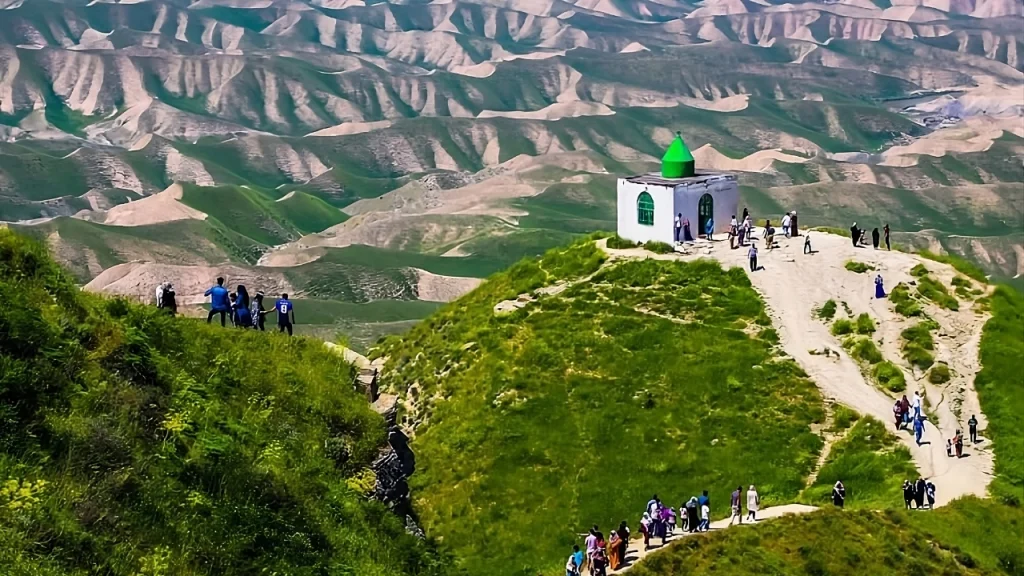
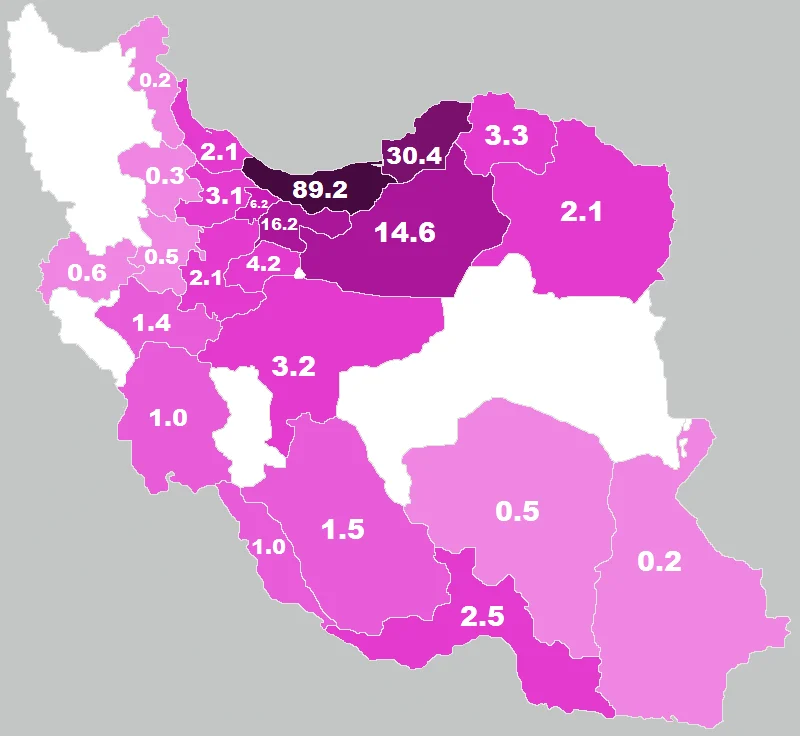
The geographical distribution of Mazanderani people spans across the southern Caspian Sea region, with their traditional homeland, Tabaristan, extending from Aliabad Katoul in the east to Ramsar in the west. To the north lies the vast Caspian Sea, while the mighty Alborz Mountains form their southern boundary, reaching into areas like Damghan, Mahdishahr, Firuzkuh, and Alborz province. Historically, the region experienced long periods under the independence of Tabaristan rulers after the Arab invasion, fostering unique traditions until its annexation into the Safavid Empire in 1596. The humid forests of Mazandaran along the coast give way to mountainous regions of Tabaristan further inland, shaping both their ancient settlements and their way of life.
Language and Social Ties
The Mazanderani language, prominently known as Tabari language, is a key marker of their cultural identity. It falls under the Northwestern Iranian languages group and holds a close relation to Gilaki, often sharing typological features with South Caucasian languages. This language boasts a long Mazanderani language written tradition dating back to the 10th century. While Persian has influenced it, the Mazanderani language retains its native elements and distinct language dialects, including Saravi, Amoli, and Baboli. Most Mazanderanis are also fluent in Persian.
Mazani people’s social divisions are evident in their lifestyle, categorizing them into groups like Maazeruni (plains dwellers), Koohi (mountain dwellers), Tat (highland pastoralists), Galash (cattle herders), Kord (sheep herders), Mokhtabad (seasonal nomads), and Katul (mixed farmers/herders). This demonstrates their diverse social ties and adaptations to varied terrains. Storytelling in Mazandaran and Mazanderani poetry tradition are vital cultural expressions, reflecting the richness of their oral traditions. Significant Tabari tribes such as the Alikahi, Parvar, Chashm, Kalateh, and Chahardeh continue to uphold these deep-rooted community bonds.


Cuisine of Mazandaran
Traditional Mazanderani dishes offer a delightful exploration of regional flavors, deeply influenced by their coastal and mountainous environments. Coastal Mazanderani cuisine frequently features Mazanderani fish recipes and Caspian rice dishes, complemented by fresh vegetables. In contrast, mountainous Mazanderani food often utilizes unique Mazanderani indigenous herbs. Citrus fruits are also influential, lending a distinct tang to many dishes.
Among the famous Mazanderani stews, you’ll find Morgh Torsh (sour chicken stew) and Espenasak (lamb/beef with spinach and garlic leaves). Other must-try authentic Mazanderani recipes include Naz Khatun, a flavorful eggplant dip, and Kaii Pola, a pumpkin and minced meat dish. Mazanderani nettle soup is popular, known for its perceived medicinal properties. The culinary traditions of Tabaristan often share similarities with Gilani cuisine, highlighting a shared regional gastronomic heritage.


Traditional Mazanderani Clothing
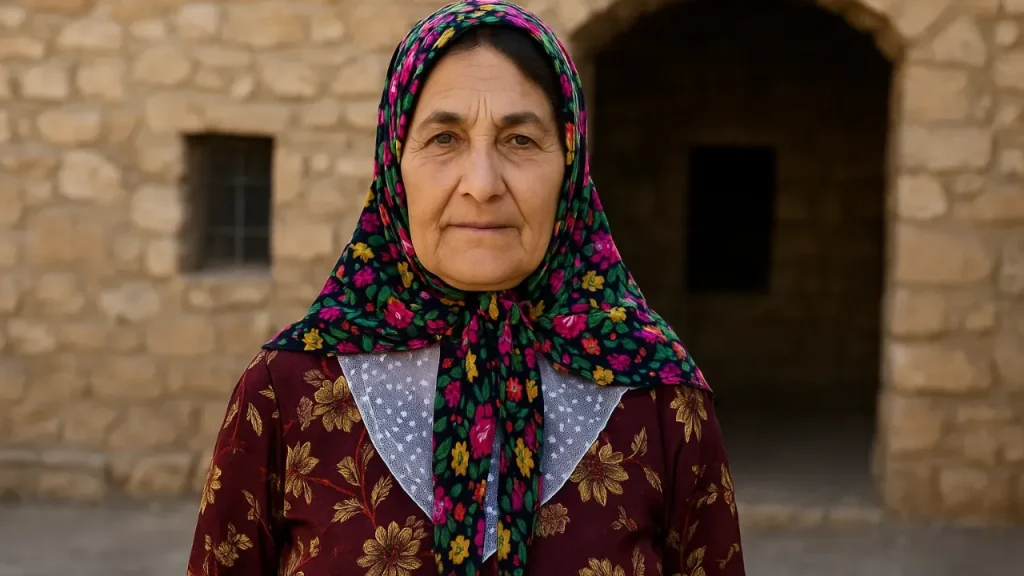
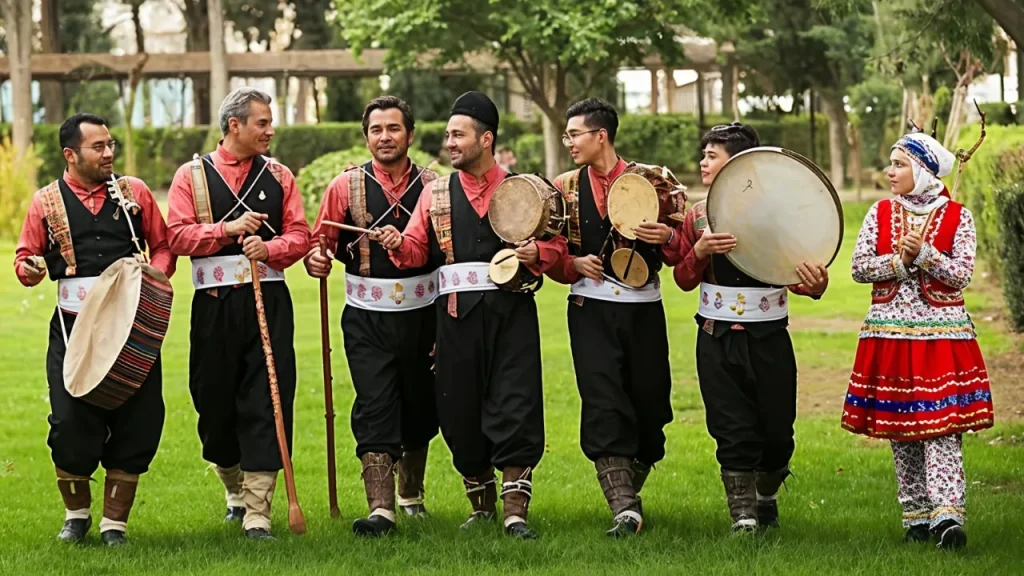
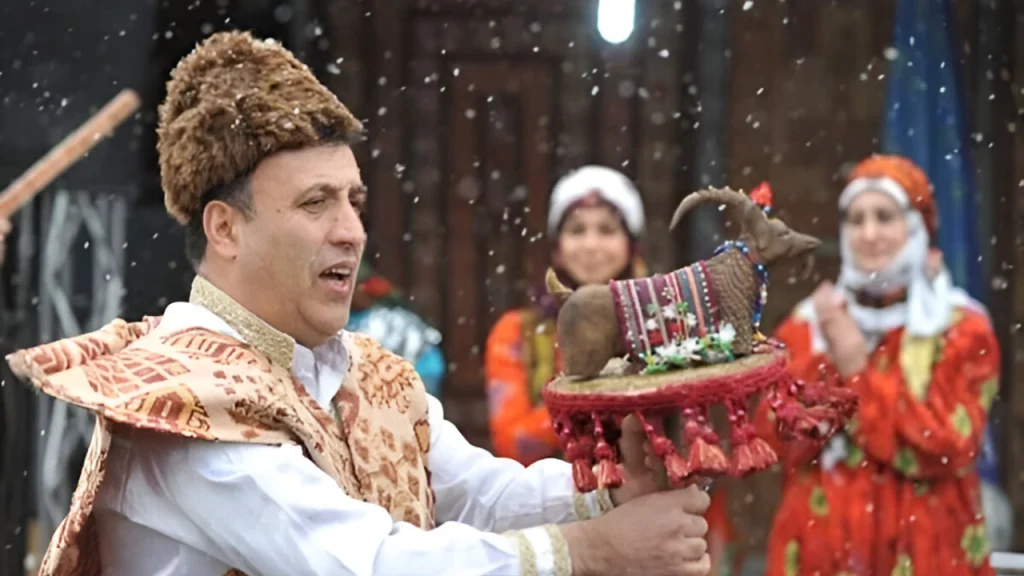
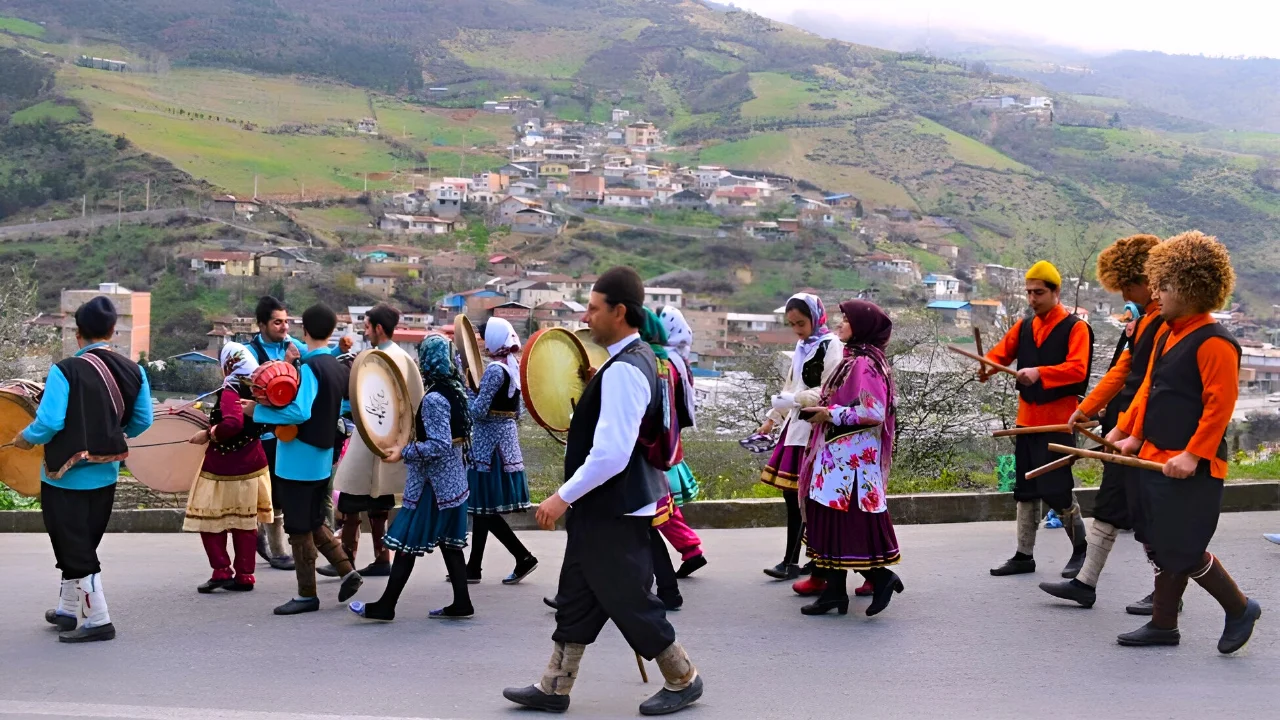
Traditional Mazanderani clothing is renowned for its vibrant colors, drawing inspiration directly from the region’s abundant nature. Mazanderani women’s attire often includes a distinctive pleated skirt called Shalite, worn over pants, especially for ceremonial Mazanderani dances. They also don vests or long-sleeved jackets and decorative belts over their gowns, sometimes accessorizing with hats adorned with gold coins. Younger women frequently wear brightly colored dresses embellished with sequins and beads.
Mazanderani men’s traditional dress, known as Jomeh or Jameh, varies by season and occupation. Common elements include dark blue or black Pashmbal trousers and V-neck vests in winter. Mazanderani shepherd clothing, such as the Shola and Boshloq attire, is designed for the rugged mountain terrain. Mazanderani traditional jewelry, like the Qaldoon amber necklace, anklets, and ornate pins, further enhances the women’s colorful garments, reflecting the rich cultural significance of Mazanderani clothing.
Mazanderani Handicrafts
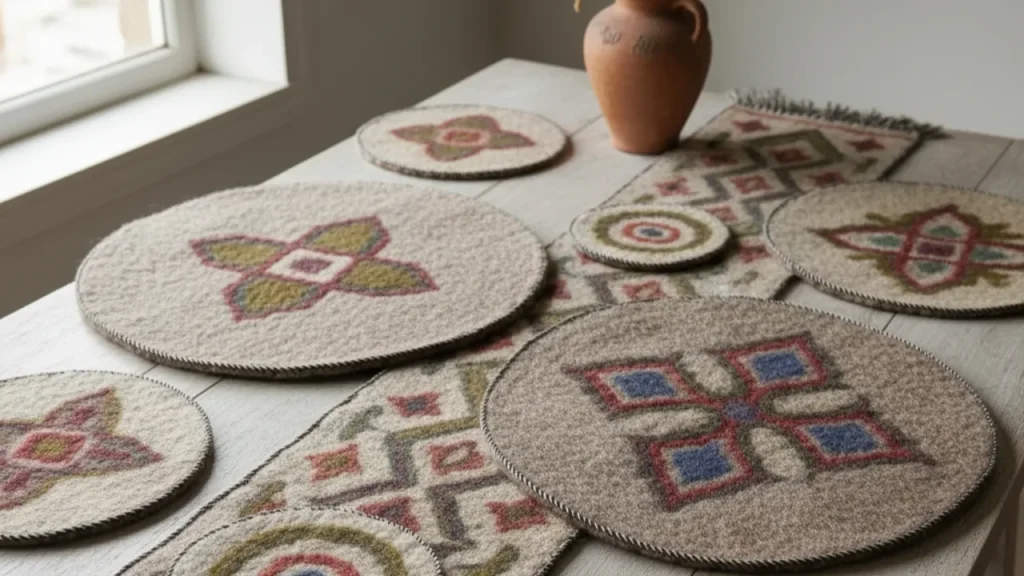
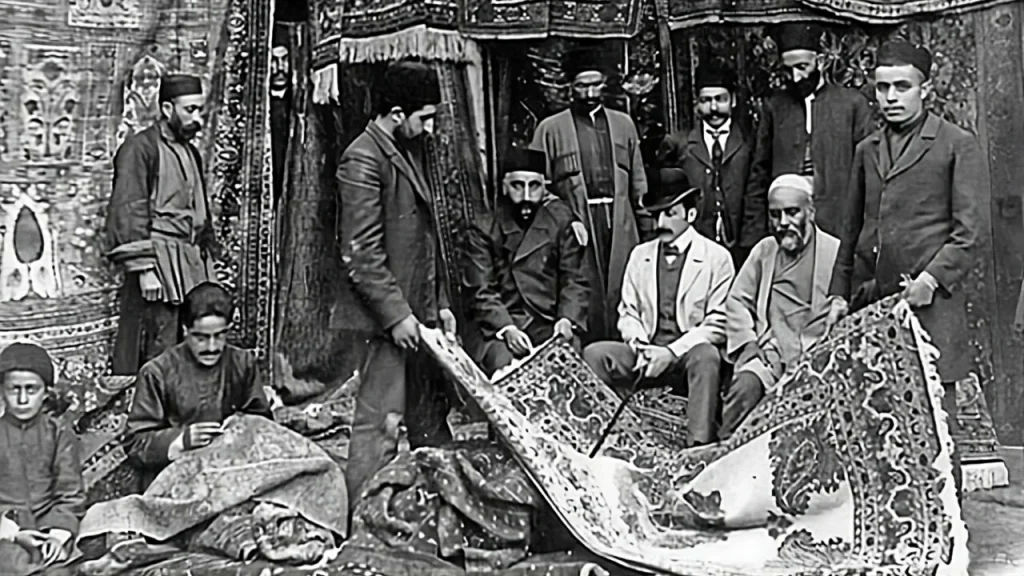
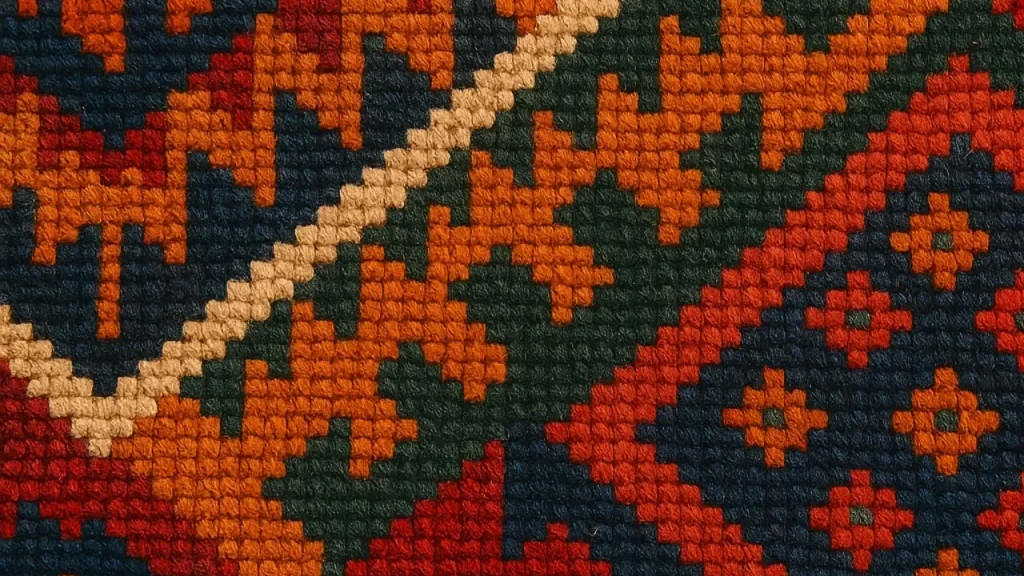
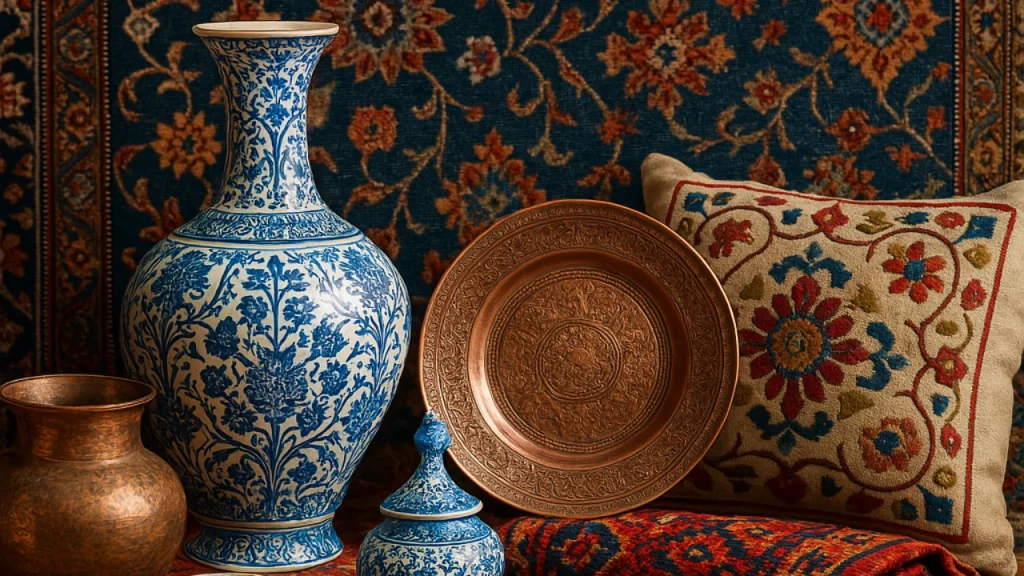
The handicrafts of Mazandaran province showcase a rich artisan tradition passed down through generations. Carpet weaving in Mazandaran stands out, with intricate designs often inspired by nature and crafted from natural fibers and wool. Mazanderani pottery art transforms clay into beautiful artistic objects, while basket weaving Mazandaran is one of the oldest crafts, producing various wicker items like baskets and mats.
Another significant art form is lacquerwork Mazanderani designs, featuring detailed patterns on wooden decorative objects. Kilim weaving Mazandaran creates colorful textiles from wool and cotton, known for their durability and beauty. Stone cutting art Mazandaran is a traditional practice where artisans skillfully engrave designs on local stones. Furthermore, the unique Tabari Chuqa weaving technique represents a specialized form of woven cloth, collectively forming the diverse Mazanderani artistic heritage.
Explore authentic Persian handicrafts from ethnic artisans.


Mazanderani Music and Dance
Traditional Mazanderani dances, also known as Tabarian folk dances, are integral to their cultural celebrations, especially at Mazanderani wedding dances. Specific forms include Dasmal Sema, Majme Sema, Lampa Sema, Derum Bakordan (Tak Dast), Tesh Sema, Chakka Sema, and Saz Sema. Chakka Sema movements are particularly dynamic, involving clapping and expressive hand, foot, and shoulder movements, often performed with a handkerchief.
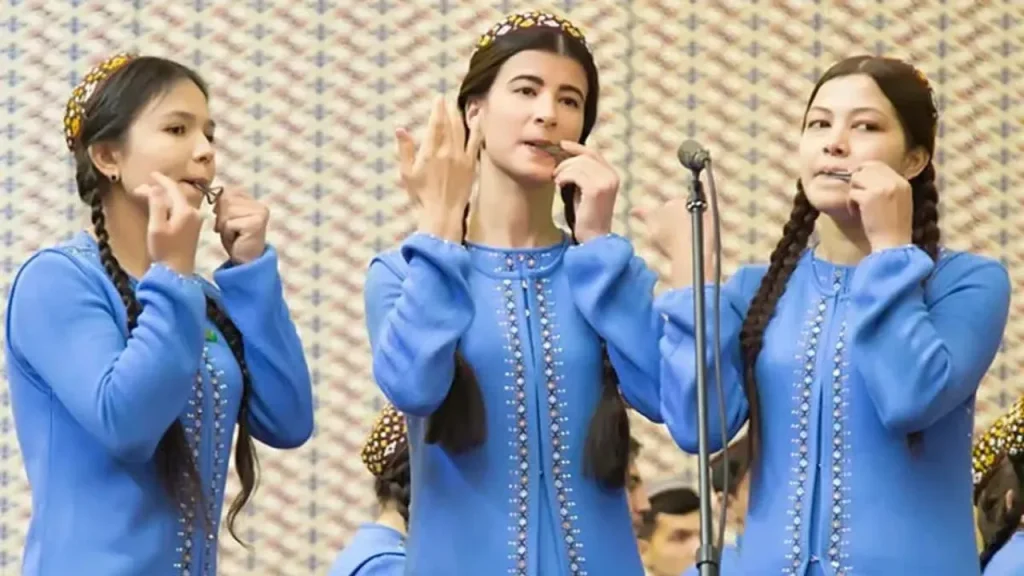
The traditional Mazanderani instruments that provide the rhythmic backbone for these Mazanderani cultural performances include the tambour, dohol, and kamancheh. Sometimes, even household items like washtubs are used to create the vibrant rhythms. Alongside these captivating dances, Mazanderani folk songs are a significant part of their musical heritage, preserving stories and traditions through singing traditions Mazandaran. These authentic Mazanderani dance forms are a testament to the region’s lively cultural events.


Mazanderani Mythology
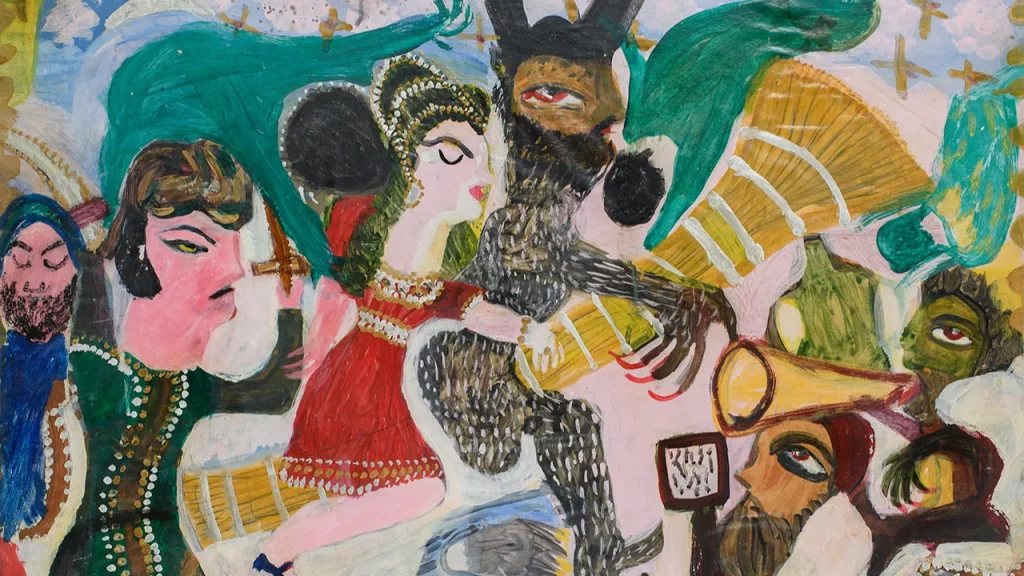
Mazanderani mythology and legends are deeply intertwined with the region’s mystical landscape, rich with ancient myths of Mazandaran. Nestled among the dense Hyrcanian Forest legends, towering Alborz Mountains folklore, and the expansive Caspian Sea ancient tales, the area boasts a heritage of epic and romantic sagas. The symbolism in Mazanderani myths is profound, with branches extending into the tangible world, creating a tapestry of Mazandaran historical sagas and captivating folklore traditions of Mazanderan.
These oral mythology of Mazanderani narratives frequently feature local deities, mythical creatures, and legendary heroes, reflecting the influence of nature on Mazanderani folklore. From Pre-Islamic myths Mazandaran to later tales, these Mazanderani cultural narratives provide insights into their worldview, including supernatural beliefs in Mazandaran and the enduring spiritual heritage of Mazanderani. The connection of myths to reality in Mazandaran emphasizes the deep-seated cultural significance of these timeless stories.
Learn more about Iranian ethnic diversity.
Mazanderani Wrestling
Locho wrestling Mazandaran is the traditional wrestling sport deeply embedded in the Mazanderani people culture. It’s often referred to as the Mother of Freestyle Wrestling, highlighting its historical importance in the broader wrestling world. Locho wrestling is a prominent Pahlavani wrestling Mazandaran tradition, showcasing the strength and athleticism inherent in the Mazanderani strongmen culture.
Each year, the 26 Eidma Tabari wrestling event, coinciding with the “Jashn-e Mordegan,” is a significant cultural celebration where locals gather for joyous festivities and the much-anticipated Locho wrestling tournaments. These traditional contests are central to identifying the most powerful Mazanderani wrestling champions in the region. The cultural significance of Locho wrestling extends beyond mere sport; it’s a vibrant expression of Mazanderani athleticism and a vital part of their traditional sports of Mazandaran.