Mokarrameh Ghanbari: A Pioneer of Iranian Outsider Art

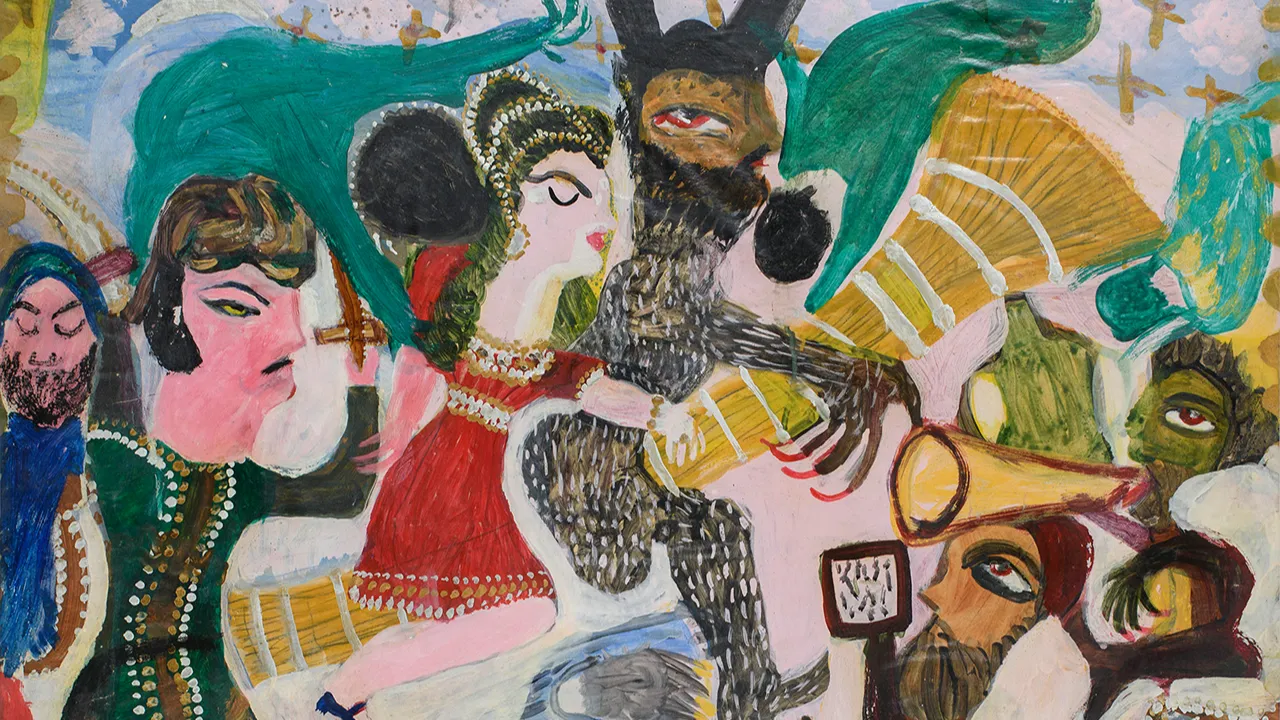
Mokarrameh Ghanbari, born in 1928 in the rural village of Darikhaneh in Mazandaran Province, Iran, is one of the most influential figures in Iranian folk art and outsider art. A self-taught painter, Mokarrameh Ghanbari began her artistic journey at the age of 67, much later than most artists, without formal education in art. She used various materials—natural dyes, paints, and even the walls of her home—to create vibrant works deeply inspired by Persian folklore, rural traditions, and her personal experiences.
Her Journey to Painting
Mokarrameh began painting at the age of 67, but it wasn’t until the final ten years of her 77-year life that she was recognized as a painter. Her life had been full of challenges. From the age of 10, she started working and faced a life full of ups and downs, eventually raising nine children. Until the age of 67, Mokarrameh worked as a seamstress, hairdresser, midwife, and local healer in her village.
But a turning point came when a significant event changed the course of her life. Mokarrameh had a beloved cow that she would take great distances to graze each day. One day, Mokarrameh fell ill, and her children, concerned for her health, sold the cow without telling her. When she found out, she was deeply saddened by the loss. To cope with the grief, she turned to painting, where her inner emotions found their outward expression.
Cultural Activities and Contributions
Ghanbari’s art captivated audiences both within Iran and internationally. Her paintings, often depicting themes of strong women, animals, and spiritual motifs, were celebrated for their bold colors and expressive storytelling. Her works served as a bridge between rural Iranian life and contemporary Iranian art, offering a glimpse into the country’s rich cultural traditions. Ghanbari held numerous exhibitions, including her first at the Seyhun Gallery in Tehran in 1995, and her art was showcased in major museums across Europe and the United States.
Achievements and Success
Despite starting her artistic career at an age when most would retire, Mokarrameh Ghanbari achieved remarkable success. Her artworks garnered national and international recognition, earning her several prestigious awards, such as “Woman of the Year” at the 12th International Conference of Iranian Women’s Studies Foundation in Stockholm (2001) and “Female Painter of 2001” by the Swedish National Museum. Her art was featured in over forty exhibitions worldwide, establishing her as a leading figure in Iranian outsider art and folk art.
Her Role in Iranian Art and Culture
Mokarrameh Ghanbari played a pivotal role in redefining the art scene in Iran. As a self-taught woman from a rural background, she defied the conventions of the art world, demonstrating that creativity and artistic talent are not bound by formal education or urban privilege. Her paintings, characterized by vibrant colors and rural symbolism, highlighted the strength of women and the resilience of rural life, marking her as a key figure in Iranian folk art. She also challenged societal norms regarding gender and age in the art world, advocating for women’s creativity in Iran.
Projects and Contributions
Beyond her personal art, Ghanbari made significant contributions to Iranian cultural heritage. Her home in Darikhaneh, where she spent most of her life, was preserved as a museum by Iran’s Cultural Heritage Organization after her death in 2005. This museum, housing many of her works, serves as a testament to her artistic legacy and provides a space for visitors to explore the world she vividly depicted in her paintings.
Her artwork often centered on storytelling, with themes of family, nature, and spirituality. Through her art, she gave a voice to rural Iranian women and contributed to the broader conversation on folk art and the value of self-taught creativity.
Mokarrameh Ghanbari in the Media
Mokarrameh Ghanbari’s influence extended beyond exhibitions and galleries; she also made a significant impact in the media. Her life and art were the subject of the documentary Mokarrameh, Memories and Dreams (1999) by Ebrahim Mokhtari. This award-winning film offers an intimate portrait of Ghanbari’s creative process and the challenges she faced as a rural woman artist. The documentary expanded her influence both within Iran and internationally, becoming a key part of her legacy.
Cultural Awards
Throughout her life, Ghanbari received numerous cultural honors in recognition of her contributions to Iranian art and global art. Notable awards include:
-
Jury Prize at the Roshd Film Festival
-
“Woman of the Year” at the 12th International Conference of Iranian Women’s Studies Foundation (2001)
-
“Female Painter of 2001” by the Swedish National Museum
-
An honorary certificate from UNESCO
These awards highlight the broad recognition of her unique artistic voice and cultural significance.
Impact on Iranian Society
Mokarrameh Ghanbari’s work had a profound impact on Iranian society, particularly in challenging the social norms that restricted artistic expression. As a self-taught, rural woman artist, she proved that creativity knows no boundaries. Her life story inspired many, especially women in rural areas, to pursue artistic endeavors despite societal expectations. Her art and journey continue to serve as a powerful symbol of resilience and the importance of female voices in the Iranian cultural landscape.
Works and Books
Although Mokarrameh Ghanbari did not write books herself, her art and life have been extensively documented in exhibition catalogues and books. The catalogue Mokarrameh Ghanbari: Visions and Dreams celebrates her works and legacy, offering a detailed visual record of her contributions to Iranian art. Additionally, her life and art are featured in the documentary Mokarrameh, Memories and Dreams, often cited in festival publications and exhibition materials.
Legacy
Mokarrameh Ghanbari’s legacy endures through her paintings, which continue to be displayed in museums, private collections, and her own museum in Darikhaneh. Her influence can be seen in the continued recognition of outsider art and folk art, as well as in the growing appreciation of self-taught artists worldwide. Her story serves as an inspiration to many, particularly those from marginalized backgrounds, proving that creative expression can flourish at any stage of life.
Sources:
- Advocartsy
- Tehran Times
- Wikipedia
- Artsy
- Artebox