Persepolis Achaemenid Empire: History & Architecture

Persepolis Achaemenid Empire: History and Architecture of the Ancient Empire
Persepolis, known as Takht-e Jamshid in Persian, was the ceremonial capital of the Achaemenid Empire, one of the greatest empires in ancient history. Founded by Darius the Great in the 6th century BCE, this majestic complex stood as a symbol of imperial power, cultural sophistication, and architectural excellence. Today, the ruins of Persepolis remain a striking testimony to the grandeur of ancient Persia.
Historical Background
The foundation of Persepolis dates back to around 518 BCE during the reign of Darius I. Designed as a ceremonial hub, it was not a typical residential city but a showcase of the Achaemenid empire’s wealth and diversity. Successive kings, including Xerxes I and Artaxerxes I, continued to expand and embellish the complex. The site was built on an immense half-artificial, half-natural terrace at the foot of Kuh-e Rahmat (Mountain of Mercy), blending engineering and nature.
The city played host to Nowruz (Persian New Year) festivities, where representatives from the vast reaches of the empire brought gifts and tributes to the king. Reliefs throughout Persepolis document this diversity of cultures under one imperial rule.
Apadana and Architectural Marvels
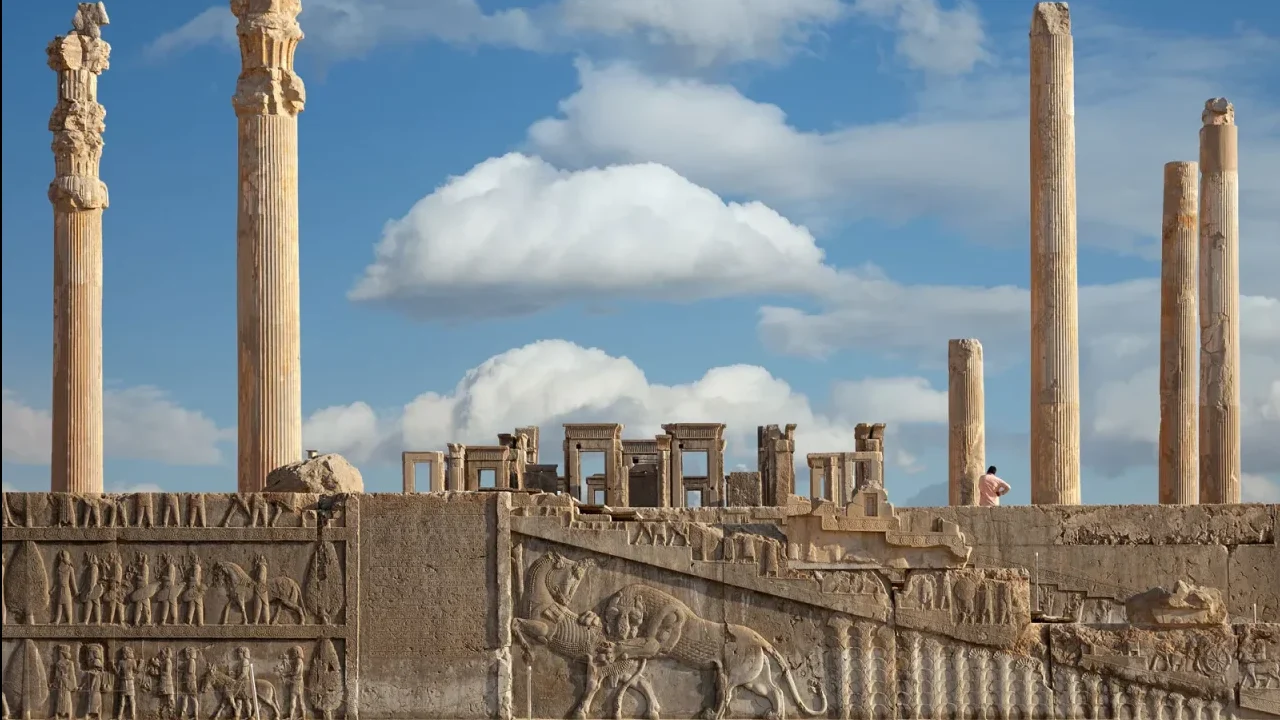
One of the most iconic structures in Persepolis is the Apadana, the grand audience hall initiated by Darius and completed by Xerxes. It could accommodate thousands and featured imposing columns over 20 meters tall. The staircases leading to the Apadana are adorned with detailed bas-reliefs depicting delegates from across the empire, each in their distinctive dress, bearing offerings.
Other notable structures include the Throne Hall (Hall of 100 Columns), the Gate of All Nations, and the royal treasury. The blend of Mesopotamian, Median, and Elamite architectural elements reflects the empire’s multicultural fabric.


City Layout and Ancient Maps
Persepolis was meticulously planned. Ancient maps and modern reconstructions reveal a highly organized layout: grand halls, residential quarters, fortifications, and ceremonial spaces all connected through strategic walkways and staircases. Archaeological surveys have helped recreate the city’s original blueprint, confirming its role as both a practical and symbolic power center.
Destruction of Persepolis: The Fall of a Glorious Capital
In 330 BCE, Alexander the Great captured Persepolis during his conquest of the Persian Empire. According to ancient historians like Diodorus Siculus and Plutarch, the palace was set ablaze during a drunken celebration, either as revenge for the Persian invasion of Greece or as an impulsive act. The fire destroyed much of the city, marking the symbolic end of the Achaemenid dynasty.
To this day, the charred remains of the columns and blackened stones bear witness to the catastrophe. Some scholars argue that the act was intentional, meant to crush the spirit of the Persian resistance and assert Greek dominance.
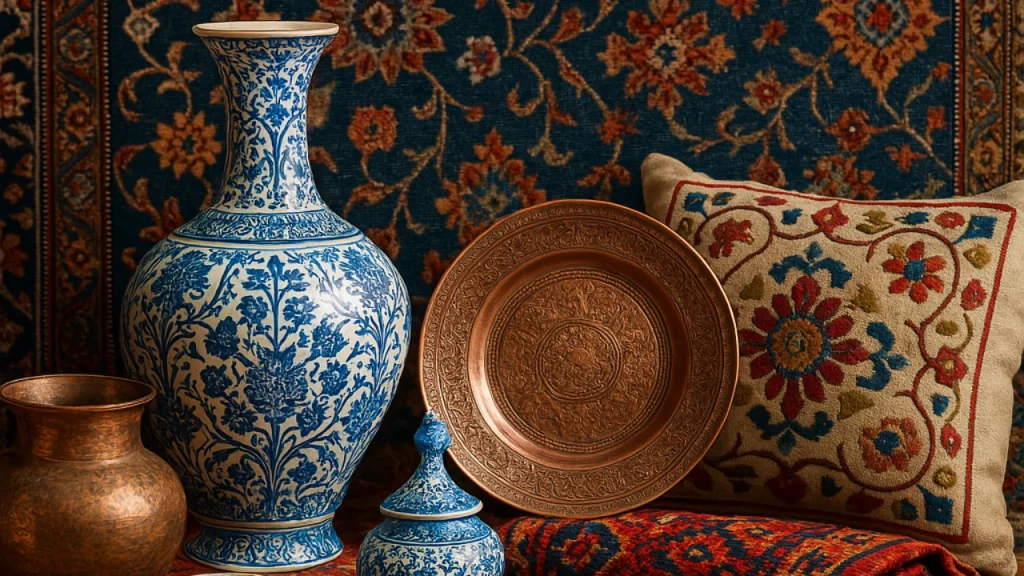
Step into the world of authentic Persian handicrafts
UNESCO World Heritage Recognition
In 1979, Persepolis was inscribed as a UNESCO World Heritage Site for its outstanding universal value as a cultural and historical landmark. The UNESCO citation emphasizes the exceptional testimony Persepolis provides of the Achaemenid civilization’s administrative and ceremonial achievements.
UNESCO Source: https://whc.unesco.org/en/list/114/

Modern Reconstructions and AI Visualizations
Modern technology, including AI and 3D reconstructions, has helped scholars and the public visualize Persepolis as it once stood. Projects by international research institutions and cultural heritage organizations offer digital models of the Apadana, royal tombs, and even potential facial reconstructions of ancient Persian rulers.
These reconstructions, grounded in archaeology, are bringing Persepolis back to life for a new generation.
Visiting Persepolis Today
Located near Shiraz in modern-day Iran, Persepolis is accessible to visitors and remains one of the most important archaeological sites in the Middle East. Despite centuries of weathering and looting, its scale and detail still evoke awe. Travelers can explore the iconic staircases, towering columns, and inscriptions that echo the ambitions of a once-mighty empire.
You can also explore a virtual 3D reconstruction of Persepolis through this interactive experience: click here
Conclusion: Legacy of Persepolis
Persepolis is more than ruins; it is a cultural and historical symbol of Iranian identity and ancient global civilization. From its architectural wonders to its dramatic fall, the site continues to inspire scholars, artists, and visitors worldwide. Preserving it ensures that the voices of ancient Persia remain heard across the ages.
A journey through Iranian culture, beyond the ordinary
References
- UNESCO World Heritage Centre: https://whc.unesco.org/en/list/114/
- Encyclopædia Britannica: https://www.britannica.com/place/Persepolis
- Plutarch, “Life of Alexander”
- Diodorus Siculus, “Bibliotheca historica”